

What Is a Marijuana Leaf?
The Marijuana Leaf represents the primary photosynthetic organ of the Cannabis sativa L. plant species. Botanically, it is classified within the Cannabaceae family. Furthermore, this foliage exhibits a palmate compound structure designed to maximize solar radiation absorption and atmospheric gas exchange.
In fact, the cannabis leaf serves as the universal visual identifier for the entire cannabis genus. Specifically, its distinctive serrated leaflets radiating from a central point create a silhouette recognized across horticultural, medical, and commercial industries.
While historical perceptions focused primarily on the psychoactive properties of the plant, modern plant physiology highlights the essential biochemical roles performed by the Marijuana Leaf. Consequently, understanding the structural nuances of the foliage provides valuable operational insights for cultivators, agricultural researchers, and legal consumers alike.
Marijuana Leaf at a Glance
| Morphological Feature | Botanical Specification |
| Scientific Name |
Cannabis sativa L., Cannabis Indica Lam., Cannabis ruderalis Janisch |
| Leaf Type |
Palmately compound (digitate) foliage |
| Arrangement |
Opposite in early vegetative phases; alternating during late vegetative and flowering stages |
| Blade Shape |
Palmate arrangement featuring linear to lanceolate individual leaflets |
| Margin Structure |
Serrated or saw-toothed outer edge angled toward the apex |
| Venation Pattern |
Pinnate within individual leaflets, branching outward from the central midrib |
| Pigmentation Range |
Light lime green, deep forest emerald, dark purple, burgundy, or obsidian black |
| Average Dimensional Size |
4 to 12 inches (10 to 30 cm) in total diameter depending on environmental conditions |
| Number of Leaflets |
3 to 13 distinct leaflets, with 7 to 9 being standard on mature plants |
| Primary Function |
Light collection, stomatal transpiration, carbon fixation, and secondary metabolite synthesis |
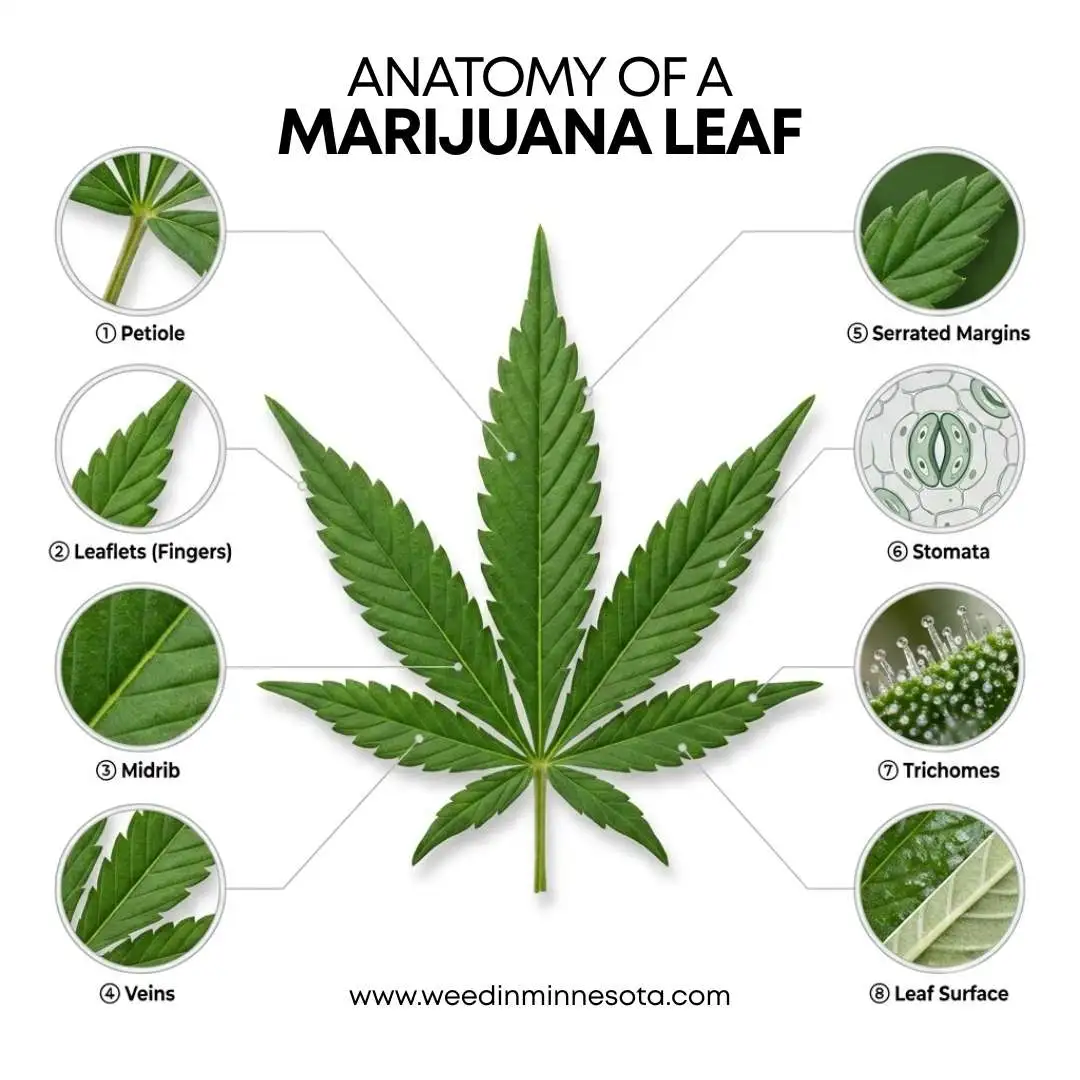
Anatomy of a Cannabis Leaf
Overall, the anatomical architecture of the Marijuana Leaf consists of several specialized cellular structures working in unison. Specifically, these structural components sustain cellular respiration, nutrient movement, and metabolic defense.
Petiole
First, the petiole is the rigid stem stalk that connects the leaf blade directly to the plant node. In addition, it houses essential vascular bundle tissues—specifically xylem and phloem—which transport water, dissolved inorganic minerals, and synthesized carbohydrates between the root system and the upper canopy.
Leaflets
Second, leaflets, which are frequently called fingers, are the individual blade segments radiating from the central rachis junction. Consequently, a healthy Marijuana Leaf features multiple distinct leaflets, each operating as an independent solar collector to fuel metabolic activity.
Serrated Margins
Third, the perimeter of each individual leaflet features sharp, forward-facing notches known as serrated margins. Furthermore, these serrations break boundary-layer air turbulence, facilitating thermal regulation and efficient gas exchange across the surface of the weed leaf.
Midrib
Fourth, the midrib acts as the central structural vein extending longitudinally through the center of each leaflet. As a result, it maintains the physical rigidity of the leaf blade while functioning as the primary fluid highway connecting secondary leaf veins to the petiole.
Veins
Fifth, secondary veins branch outward from the central midrib in a pinnate configuration, extending directly into the point of each margin serration. Therefore, this network ensures uniform hydration and nutrient distribution across the entire blade surface.
Stomata
Sixth, stomata are microscopic epidermal pores located predominantly on the lower abaxial surface of the Marijuana Leaf. Flanked by specialized guard cells, these microscopic valves open and close to regulate transpirational water loss and carbon dioxide assimilation.
Trichomes
Seventh, trichomes are specialized epidermal outgrowths categorized into non-glandular protective hairs and resin-secreting glandular structures. Specifically, glandular capitate-stalked trichomes synthesize secondary metabolites, including therapeutic cannabinoids and aromatic terpenes, reaching high density around the Cannabis flower.
Leaf Surface
Finally, the adaxial (upper) leaf surface features a hydrophobic waxy cuticle that minimizes evaporative water loss and reflects excessive ultraviolet light. In contrast, the abaxial (lower) surface exhibits a lighter shade, housing a high density of stomatal pores for gas exchange.
Read More : MN Dispensary Guide: Local Rules, Prices & Top Delivery
Functions of Marijuana Leaves
Indeed, the overall vitality and biological yield of a crop depend directly on the execution of physiological functions by every mature Marijuana Leaf.
Photosynthesis
To begin with, through photosynthesis, the Marijuana Leaf captures light energy via chlorophyll pigments localized inside chloroplasts. Specifically, the plant converts absorbed carbon dioxide (CO2) and root-absorbed water (H2O) into glucose carbohydrates (C6H12O6) and atmospheric oxygen (O2) according to the equation:
6CO2 + 6H2O + photons————> C6H12O6 + 6O2
Water Regulation
In addition, water movement throughout the vascular system relies on transpirational pull generated by stomatal activity in the weed leaf. As a result, when water evaporates through open stomata, hydrostatic pressure draws liquid moisture and essential dissolved minerals upward from the root zone.
Gas Exchange
Furthermore, during operational light periods, leaf stomata absorb atmospheric carbon dioxide necessary for dark-reaction carbon fixation. Concurrently, metabolic oxygen generated as a by product of water photolysis exits the leaf tissue into the surrounding atmosphere.
Energy Storage
Moreover, excess carbohydrates manufactured during peak daylight photosynthesis are converted into complex starches and stored within the tissue of the Marijuana Leaf. Subsequently, during night cycles, enzymatic pathways convert these starches back into simple sugars to supply growth tips and developing Marijuana flower sites.
Temperature Control
On the other hand, direct light exposure can raise canopy temperatures beyond optimal enzymatic ranges. Consequently, by releasing water vapor through transpirational cooling, the Marijuana Leaf actively regulates its internal tissue temperature, maintaining enzymatic efficiency during summer weather across agricultural regions in Minnesota.
Plant Defense
Finally, the epidermal layer of the Marijuana Leaf develops defensive physical barriers, including non-glandular cystolith trichomes and glandular resin heads. For example, bitter sesquiterpenes and sticky cannabinoid acids accumulated within these structures deter herbivorous insects and reduce ultraviolet radiation damage.
Different Types of Marijuana Leaf
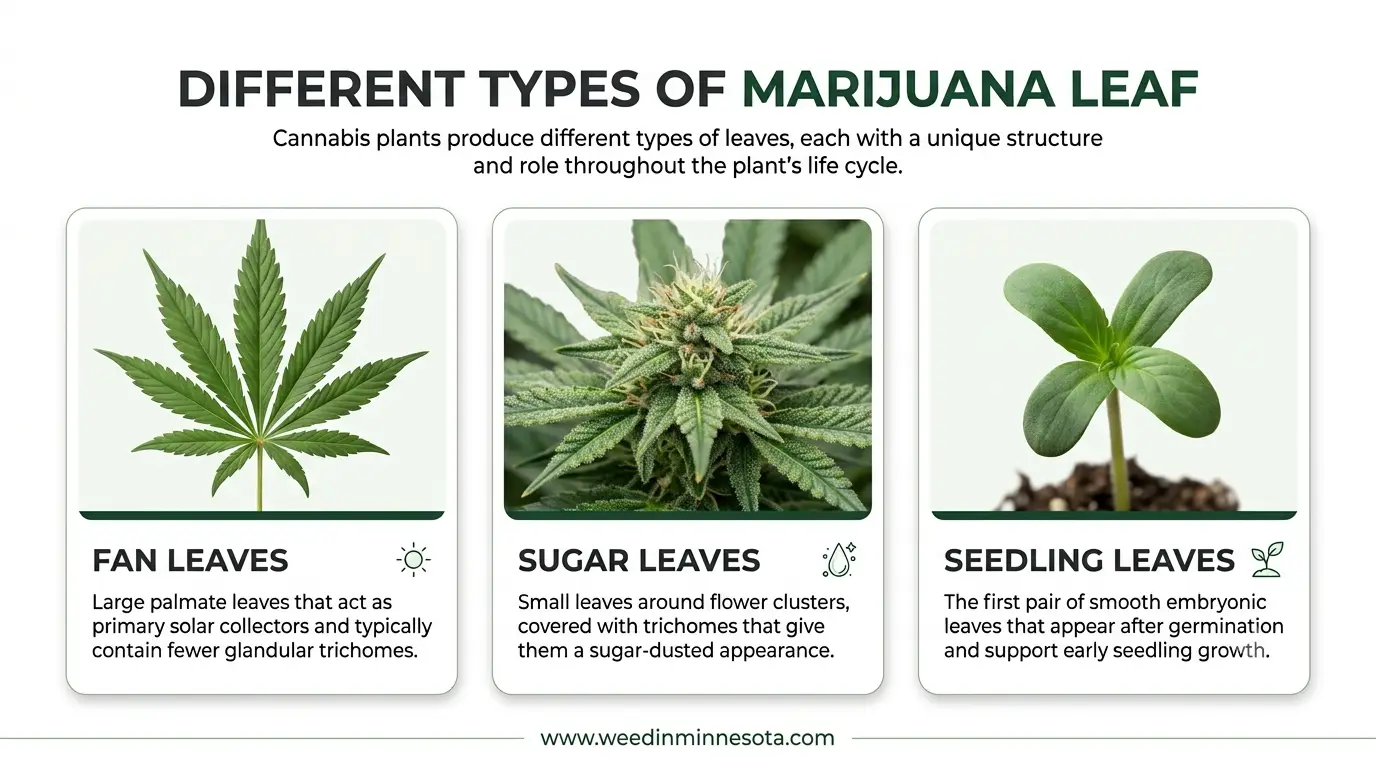
Overall, cannabis morphology encompasses three distinct foliage categories, each filling a specific physiological role during the plant life cycle.
Fan Leaves
First, fan leaves represent the large, palmate foliage that extends outward from main stalks and lateral branches via long petioles. However, these broad leaves function as primary solar collectors and maintain lower concentrations of glandular trichomes compared to floral bracts.
Sugar Leaves
Second, sugar leaves are small, single- or multi-pointed leaves that emerge directly from female floral clusters. In fact, these leaves earn their name from a dense covering of capitate-stalked trichomes, which gives them a sugar-dusted appearance and substantial cannabinoid content.
Seedling Leaves
Third, seedling leaves, or cotyledons, are the first pair of embryonic leaves that emerge following seed germination. In contrast to mature leaves, these smooth, rounded leaves lack serrated margins and function primarily to metabolize stored seed energy until the first true set of serrated leaves develops.
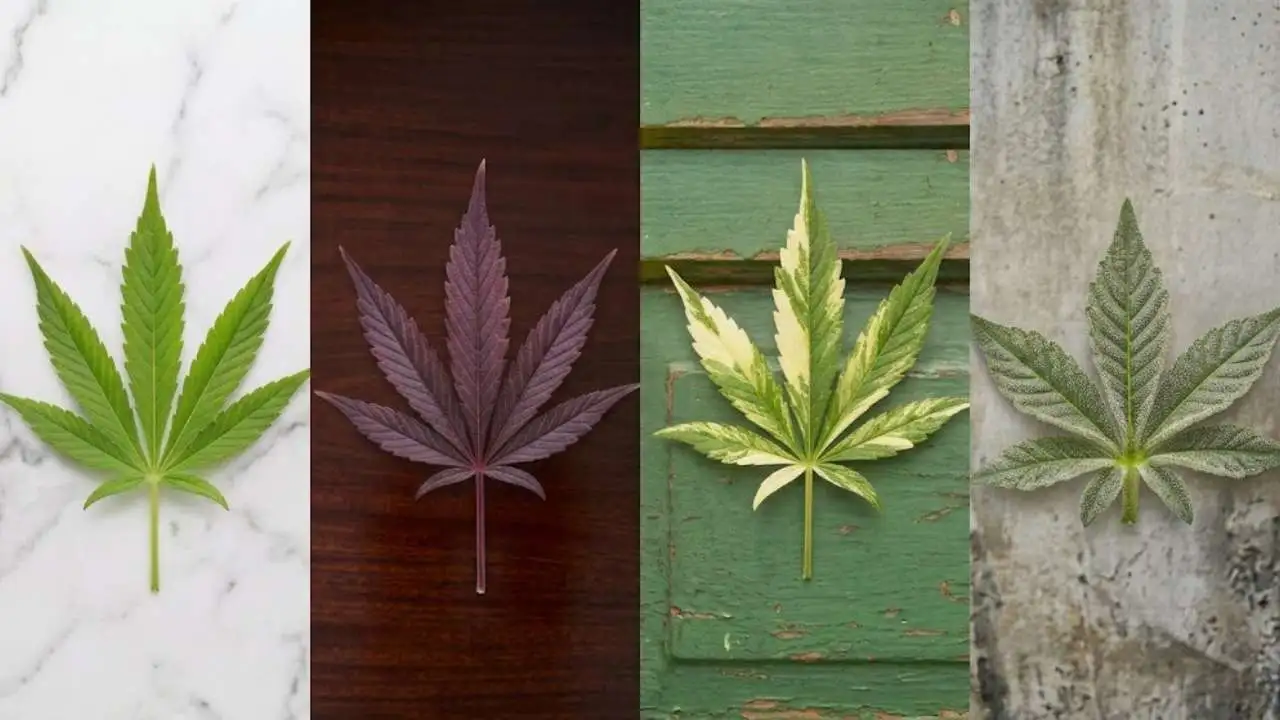
Indica vs Sativa vs Hybrid Leaves
For instance, distinct geographic origins have driven structural adaptations in foliage morphology across different cannabis sub-species.
| Morphological Feature | Cannabis Indica | Cannabis sativa | Hybrid Cultivars |
| Leaflet Width |
Broad, wide, and overlapping |
Slender, narrow, and separated |
Intermediate width profile |
| Blade Length | Short to medium overall length |
Elongated, slender blade layout |
Balanced length distribution |
| Leaf Coloration |
Deep forest green to dark purple |
Light lime green or yellowish green |
Variable green shades |
| Finger Count |
7 to 9 thick leaflets |
9 to 13 thin leaflets |
5 to 9 blended leaflets |
| Growth Pattern | Dense, bushy, compact canopy structure | Tall, open-branching canopy structure | Variable structure |
| Overall Appearance | Broad, compact palmate footprint | Delicate, webbed palmate footprint | Balanced palmate fan structure |
How to Identify a Marijuana Leaf
In order to perform accurate field identification of the Marijuana Leaf, one must evaluate specific morphological traits.
- Finger Count: First, a mature Marijuana Leaf displays between 5 and 11 distinct leaflets originating from a single petiole connection, setting it apart from common garden plants with simple leaf structures.
- Serrated Edges: Second, every individual leaflet features prominent saw-toothed serrations along its outer boundaries. Specifically, these marginal teeth angle upward toward the leaflet apex rather than extending outward.
- Palmate Shape: Third, the structural configuration is palmately compound, with all leaflets radiating outward from a single point at the terminus of the petiole, resembling an open hand.
- Colour: Fourth, healthy leaves exhibit green hues ranging from vibrant lime green during early growth to deep forest green or purple tones during late floral maturation.
- Vein Pattern: Fifth, inspecting the underside reveals a pinnate vascular structure where secondary veins branch off the central midrib and extend directly into the tip of each serrated edge notch.
- Texture: Finally, the upper surface feels relatively smooth due to its protective waxy cuticle, whereas the lower surface exhibits a slightly textured feel created by stomatal openings and microscopic hairs.
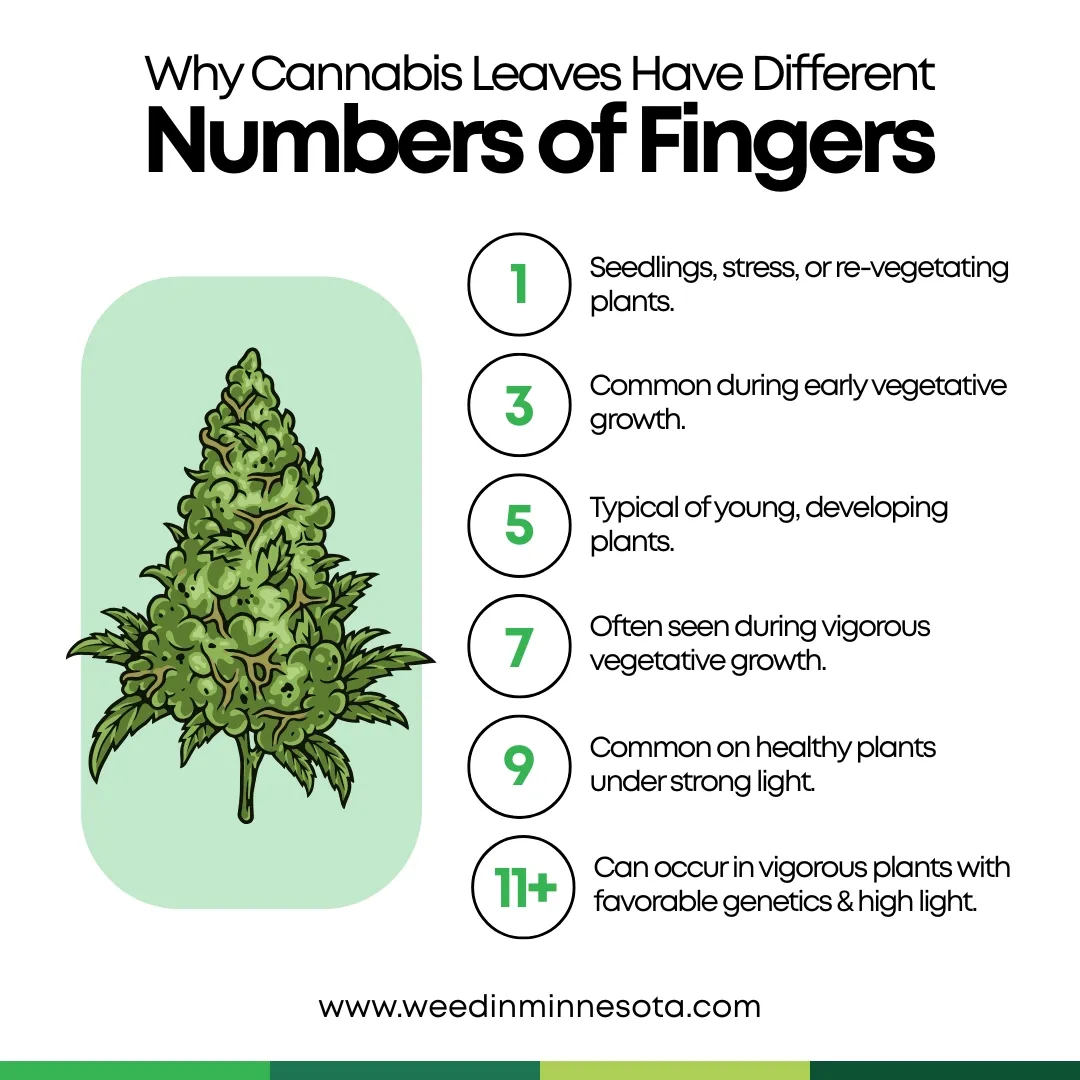
Why Cannabis Leaves Have Different Numbers of Fingers
As a matter of fact, the number of leaflets present on a single Marijuana Leaf changes dynamically throughout the lifespan of the plant based on maturity, genetics, and environmental conditions.
- 1 Finger: To begin with, single-finger leaves appear on newly sprouted seedlings directly above the cotyledons, during extreme light cycle stress, or when flowering plants revert to vegetative growth.
- 3 Fingers: Next, three-finger leaves develop during early juvenile vegetative growth or under minor environmental stress conditions.
- 5 Fingers: In addition, five-finger leaves serve as the baseline structure for young vegetative plants and many compact modern indoor hybrids.
- 7 Fingers: Furthermore, seven-finger leaves indicate vigorous vegetative health and optimal structural growth in mature plants.
- 9 Fingers: Moreover, nine-finger leaves develop on healthy canopy tops receiving full-spectrum light.
- 11+ Fingers: Finally, leaves with eleven or more fingers represent maximum solar-harvesting capacity, commonly seen on heirloom landrace Sativa strains grown in high-intensity sunlight.
Read More : MN Recreational Dispensary: Complete 2026 Guide & Delivery
Cannabis Leaf Growth Through Each Stage
Overall, the development of the Marijuana Leaf progresses through four distinct growth phases.
Seedling
First, following germination, smooth cotyledon leaves emerge, followed by the first set of true single-finger leaves with serrated margins. Subsequently, adjacent nodes produce 3-finger leaves as root system establishment progresses.
Vegetative
Second, during vegetative growth, the plant builds photosynthetic capacity by producing 5-, 7-, and 9-finger fan leaves. As a result, these broad leaves absorb sunlight to drive structural branch expansion and root mass development.
Flowering
Third, as photoperiods shift, energy redirects from fan leaf production toward floral cluster development. Consequently, small, trichome-dense sugar leaves grow within developing colas, supplying localized carbohydrates to expanding female bracts.
Harvest
Finally, during final plant maturation, natural senescence occurs, transferring mobile nutrients out of older fan leaves and into resinous buds. Therefore, fan leaves fade from dark green to yellow, red, or purple, indicating peak harvest timing.
Healthy vs Unhealthy Marijuana Leaves
In fact, monitoring leaf appearance provides crucial diagnostic insight into plant nutrition and environmental health.
| Visual Leaf Indicator | Healthy Plant Status | Unhealthy Symptom Cause |
| Yellowing (Chlorosis) |
Natural fade during late harvest senescence |
Lower leaf nitrogen deficiency; root lock; overwatering |
| Leaf Edge Curling | Flat, firm leaf surface oriented to light | Heat stress (“Tacoing”); wind burn; pest damage |
| Brown Spots | Clean, unblemished leaf tissue | Calcium/magnesium deficiency; fungal leaf spot; pH burn |
| Foliage Drooping | Supple horizontal stance with firm petioles | Overwatering (firm leaves); underwatering (limp leaves) |
| Purple Coloration |
Cold-temperature anthocyanin expression |
Phosphorus deficiency; extreme cold stress |
| Burnt Tips | Uniform green margins to tip | Nutrient burn (excessive fertilizer concentration) |
Common Marijuana Leaf Problems
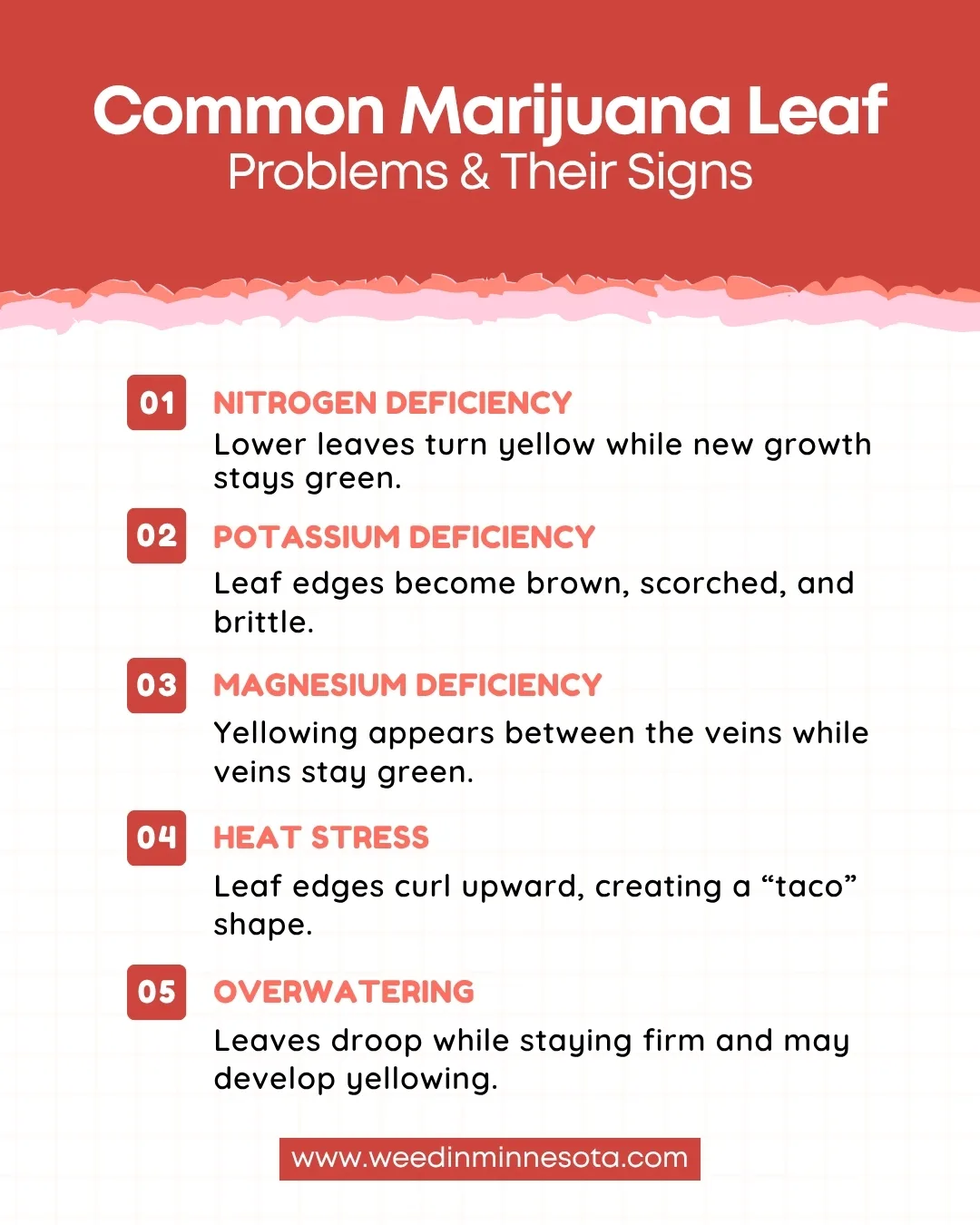
For instance, cultivators across Minneapolis, Saint Paul, and surrounding Minnesota communities diagnose crop health issues by evaluating physical symptoms on the Marijuana Leaf.
- Nitrogen Deficiency: First, nitrogen is a mobile nutrient, meaning the plant reallocates it from older tissue to support new growth during shortages. Consequently, this manifests as progressive yellowing (chlorosis) starting on lower fan leaves while top growth remains green.
- Potassium Deficiency: Second, potassium deficits produce brown, scorched leaf edges along mature fan leaves, resembling chemical burns. As a result, leaves become dry and brittle, developing dark necrotic spots across inner tissue over time.
- Magnesium Deficiency: Third, magnesium shortages cause interveinal chlorosis, where leaf tissue between veins turns yellow while primary veins remain dark green. Therefore, this pattern typically affects lower and middle fan leaves first.
- Heat Stress: Fourth, excessive ambient temperatures cause leaf margins to curl upward into a shape commonly called “tacoing.” In fact, this reaction reduces exposed leaf surface area to slow evaporative water loss during heat spikes.
- Overwatering: Fifth, overwatered root zones suffer from oxygen deprivation, causing entire leaves to droop heavily while remaining firm. Consequently, prolonged overwatering limits nutrient uptake, leading to chlorosis and root decay.
- Pests: Finally, common agricultural pests produce distinct diagnostic marks on foliage. For example, spider mites leave tiny yellow dots across the upper surface, while thrips leave silvery patches with dark waste spots.
What Do Marijuana Leaf Contain?
Specifically, the biochemical profile of the Marijuana Leaf contains a rich array of primary and secondary plant compounds.
- Chlorophyll: To begin with, chlorophyll a and b are primary photosynthetic pigments that absorb blue and red light wavelengths, giving the cannabis leaf its characteristic green colour.
- Cannabinoids: In addition, foliage contains acidic cannabinoid compounds, primarily THCA and CBDA. However, fan leaves carry low cannabinoid levels (<0.5%), whereas resinous sugar leaves store high concentrations near the flower.
- Terpenes: Furthermore, volatile aromatic compounds—including myrcene, caryophyllene, pinene, and limonene—are synthesized within foliage trichomes, offering distinct aromas and natural insect protection.
- Flavonoids: Moreover, cannabis foliage contains unique secondary antioxidants known as cannflavins (specifically Cannflavin A, B, and C), along with quercetin and kaempferol, which shield leaf tissue from ultraviolet stress.
- Trichomes: Finally, glandular trichomes distributed across leaf surfaces synthesize and store valuable secondary metabolites.
Read More : Lemon Cherry Gelato Strain Full Review
Can Marijuana Leaf Get You High?
In order to determine whether consuming a Marijuana Leaf produces psychoactive effects, one must evaluate the leaf type and heat exposure.
First, raw fan leaves contain minimal amounts of active Delta9 -tetrahydrocannabinol (Delta9-THC). Instead, cannabinoids exist in their non-psychoactive acidic form, predominantly tetrahydrocannabinol acid (THCA). Therefore, consuming unheated fan leaves does not cause intoxication.
In contrast, sugar leaves trimmed from the mature Cannabis flower carry dense clusters of capitate-stalked trichomes. Specifically, when sugar leaves undergo heating (decarboxylation), non-psychoactive THCA converts into active Delta9-THC:

Consequently, extractions and edibles made from sugar leaves produce noticeable psychoactive effects, whereas raw fan leaf preparations deliver non-intoxicating Cannabis leaf benefits.
Uses of Marijuana Leaf
As a result, modern commercial and wellness applications utilize both fan leaves and sugar leaves across several distinct product categories.
- Juicing: First, raw, unheated fan leaves can be processed in cold-press juicers to extract unheated THCA, CBDA, active terpenes, and essential micronutrients without intoxicating effects.
- Compost: Second, spent vegetative fan leaves serve as an excellent source of organic nitrogen and trace minerals. Thus, returning shredded leaf biomass into agricultural soil enhances structure for future crop cycles.
- Extraction: Third, trichome-rich sugar leaves collected during floral trimming serve as primary inputs for hydrocarbon, solventless rosin, or ethanol extractions, yielding high-potency concentrates and distillates.
- Tea: Fourth, dried fan leaves and sugar leaves can be steeped in hot water with a lipid binder, such as coconut oil or full-fat milk, to create herbal infusions rich in polyphenols and minor cannabinoids.
- Edibles: Fifth, decarboxylated sugar leaves can be simmered with butter or plant oils to create infused fats used in baked goods, chocolates, and savory dishes.
- Animal Feed: Finally, in legally regulated agricultural settings, non-psychoactive vegetative leaf biomass is evaluated as a nutrient-dense fodder supplement for livestock due to its fiber and protein content.

Marijuana Leaf Symbol Explained
Over time, the evolution of the Marijuana Leaf transformed it from a standard botanical diagram into a globally recognized cultural emblem.
Specifically, during the mid-20th century, counterculture movements adopted the stylized 7-finger weed leaf design as a symbol of personal freedom, natural medicine, and legal reform. Consequently, the symbol gained universal commercial recognition, appearing on medical dispensary signage, apparel, and advocacy media worldwide.
However, a common misconception holds that the stylized leaf graphic represents the primary consumable drug component of the plant. In reality, while foliage serves vital physiological functions, the unfertilized female flower—the Cannabis flower—holds the highest concentration of active cannabinoids.
Interesting Facts About Marijuana Leaf
- Heliotropic Movement: First, the Marijuana Leaf exhibits tracking behaviour during early growth, adjusting its surface angle throughout the day to maximize direct light exposure.
- Environmental Indicator: Second, foliage coloration changes rapidly in response to root zone pH shifts, making the cannabis leaf an effective diagnostic tool for master cultivators.
- Local Retail Access: Finally, residents seeking lab-tested, compliant products across Minneapolis, Saint Paul, Rochester, Bloomington, and Duluth rely on trusted dispensaries like
weedinminnesota.com, a Minnesota establishment providing premium legal options with hundreds of 5-star customer reviews. Consumers can browse available products and place direct orders through the online cannabis store.
Frequently Asked Questions (FAQs)
Q : What does a marijuana leaf look like?
A : To begin with, a Marijuana Leaf is a palmately compound leaf consisting of 3 to 13 distinct leaflets radiating outward from a single petiole base. In addition, each leaflet features forward-facing saw-toothed serrated edges and distinct pinnate vein patterns.
Q : Do weed leaves have THC?
A : Specifically, fan leaves contain negligible concentrations of active THC, carrying trace amounts of non-psychoactive THCA. On the other hand, sugar leaves trimmed directly from the Cannabis flower contain capitate-stalked trichomes rich in THCA, which converts to active Delta-9 -THC when heated.
Q : How to identify marijuana leaf?
A : In order to identify a weed leaf, look for its palmate structure (leaflets fanning out from one central point), sharp serrated margins pointing toward the tip, and an odd number of leaflets (commonly 7 or 9 on mature plants).
Q : How many leaf does a marijuana plant have?
A : In general, a mature plant can feature hundreds of fan leaves and thousands of small sugar leaves, depending on vegetation duration, pruning techniques, and overall growth environment.
Q : Why do Marijuana Leaf have 7 fingers?
A : Essentially, developing 7 fingers provides an optimal surface area for light absorption while maintaining efficient water transpiration control during peak vegetative growth.
Q : Can fan leaves be smoked?
A : Although fan leaves can be dried and smoked, doing so is generally discouraged. Specifically, raw fan leaves contain high chlorophyll levels and minimal trichomes, resulting in harsh smoke and negligible psychoactive effect.
Q : What are the benefits of cannabis leaves?
A : Overall, key Cannabis leaf benefits include dietary fiber, essential vitamins, antioxidant flavonoids, and non-intoxicating acidic cannabinoids (THCA/CBDA) harvested through juicing, herbal teas, or topical extractions.
Conclusion
In conclusion, the Marijuana Leaf functions as an essential photosynthetic engine, a diagnostic tool for crop health, and an iconic cultural symbol. From light conversion to trichome development, every anatomical feature of the cannabis leaf plays an important role in plant health and secondary metabolite synthesis.
Furthermore, whether assessing foliage for nutritional deficiencies or sourcing high-quality Marijuana flower products, understanding leaf biology empowers consumers and growers to make informed decisions. For consumers across Saint Paul, Minneapolis, and the broader Minnesota region, accessing legal, tested products remains straightforward through reputable local dispensaries like weedinminnesota.com
Frequently Asked Questions
The Marijuana Leaf represents the primary photosynthetic organ of the Cannabis sativa L. plant species. Botanically, it is classified within the Cannabaceae family.
Morphological Feature Botanical Specification Scientific Name Cannabis sativa L. , Cannabis Indica Lam.
First, the petiole is the rigid stem stalk that connects the leaf blade directly to the plant node. In addition, it houses essential vascular bundle tissues—specifically xylem and phloem—which transport water, dissolved inorganic minerals, and synthesized carbohydrates between the root system and the upper canopy.
Second, leaflets, which are frequently called fingers, are the individual blade segments radiating from the central rachis junction. Consequently, a healthy Marijuana Leaf features multiple distinct leaflets, each operating as an independent solar collector to fuel metabolic activity.
The Marijuana Leaf represents the primary photosynthetic organ of the Cannabis sativa L. plant species. Botanically, it is classified within the Cannabaceae family. Furthermore, this foliage exhibits a palmate compound structure designed to maximize solar radiation absorption and atmospheric gas exchange.
Pingback: Uncle Snoop Strain Review: Terpenes, Effects & Market Guide