
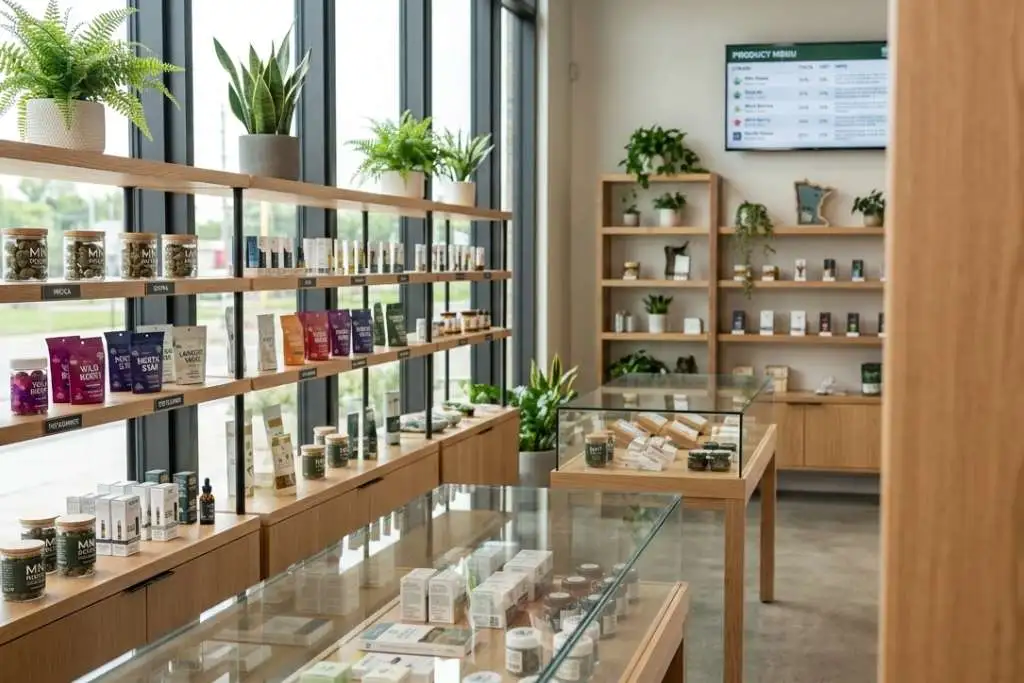
The rapid development of the legal cannabis industry in the North Star State has established a highly unique and complex commercial landscape. Cumulative legal transactions in the state surpassed 1.4 million by early 2026, representing a market value of approximately 134 million dollars. Consequently, navigating the physical and digital retail ecosystem of Dispensaries in Minnesota requires a precise understanding of evolving state regulations, municipal controls, and tribal sovereignty.
To begin, understanding where and how to purchase verified, high-quality products is essential for both novice consumers and experienced medical patients. Furthermore, this comprehensive guide delivers an exhaustive analysis of the operational frameworks, regulatory shifts, and purchasing guidelines governing Minnesota dispensaries. Additionally, our goal is to help you locate a reliable MN dispensary near me while making fully informed purchasing decisions.
What is Dispensaries in Minnesota?
Specifically, a Dispensaries in Minnesota is a legally authorized retail establishment licensed to cultivate, manufacture, or distribute state-regulated cannabis and cannabinoid-containing products directly to the public. However, the operational rules governing these storefronts are established strictly under Chapter 342 of the Minnesota Statutes. As a result, the state’s Office of Cannabis Management directly manages this regulatory network to protect consumer health.
To illustrate, these licensed physical storefronts verify buyer eligibility, conduct strict transaction tracking, and collect mandatory state taxes. Currently, the retail ecosystem features three distinct organizational models, namely sovereign tribal dispensaries, privately owned state-licensed stores, and municipally owned operations. For example, sovereign tribal nations pioneered the first adult-use retail sales in August 2023. Meanwhile, private retailers and municipal shops entered the market in later phases as state licensing structures matured.
Why It Matters: Consumer Safety and Community Economics
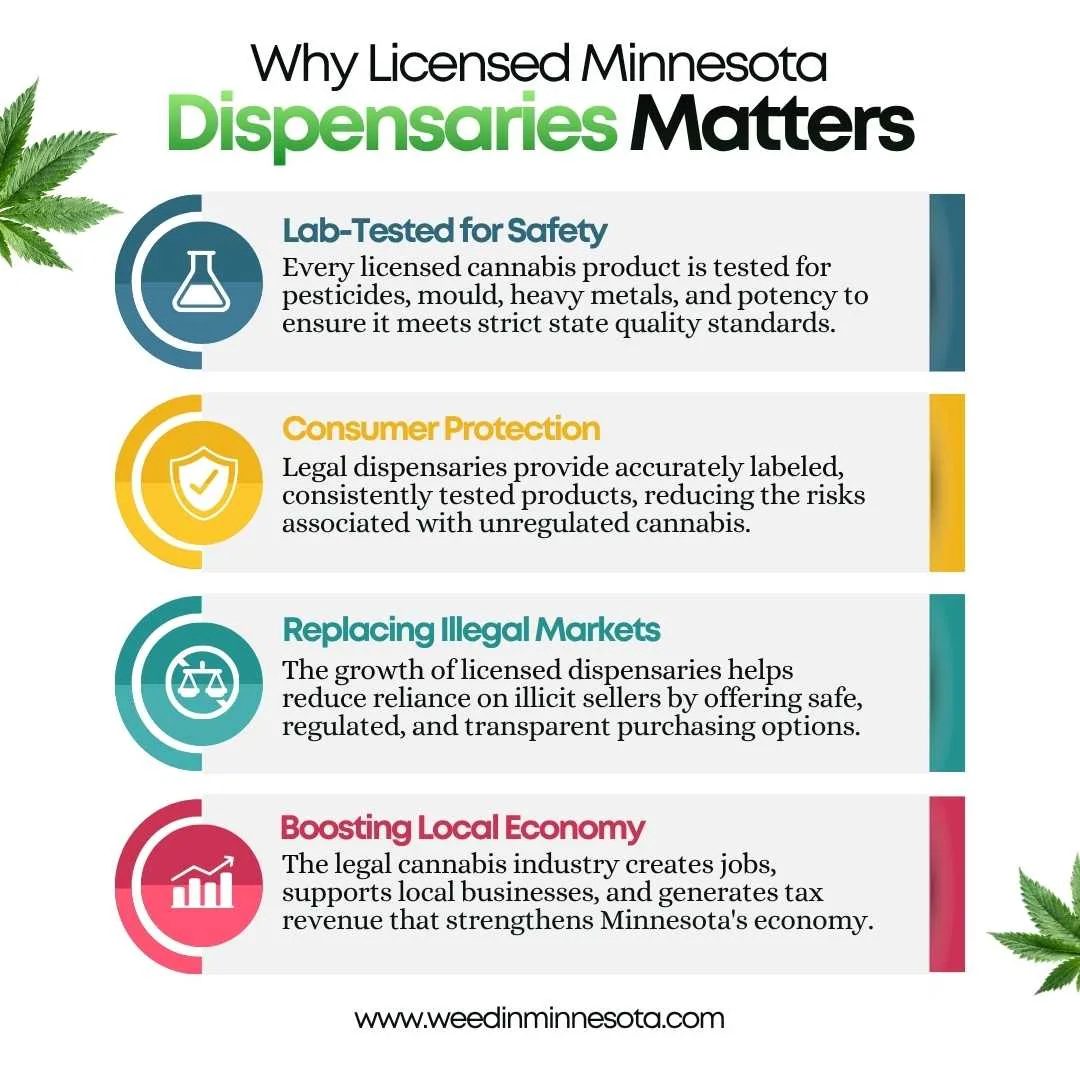
First, the growth of verified Minnesota dispensaries plays a critical role in displacing unregulated illicit channels. In the past, consumers faced notable risks, including contaminated products, inaccurate labelling, and inconsistent cannabinoid potencies. Consequently, legalization introduces comprehensive safety guidelines, ensuring that all consumer goods undergo strict, accredited laboratory testing.
Specifically, labs test these products for pesticides, mould, and heavy metals. Therefore, this quality control mechanism provides a level of protection that did not exist in the unregulated marketplace. Ultimately, the legal cannabis market drives local economic development through job creation and municipal tax revenue.
To illustrate, in cities like Anoka, community-owned retail profits directly fund public park improvements, municipal golf courses, and property tax relief. Thus, purchasing from a licensed dispensary in Minnesota yields clear benefits for both the individual and the local community.
Key Features: Comparing Regulated Retail and Unregulated Channels
In order to assist buyers, evaluating the advantages and limitations of utilizing a regulated dispensary in Minnesota helps consumers make highly informed purchasing decisions. Admittedly, while legal retail guarantees safety and consistency, consumers must navigate higher initial prices and rigid possession limits.
To clarify this contrast, the table below outlines the structured trade-offs associated with purchasing through a legal, licensed dispensary in Minnesota compared to unregulated, illicit sources.
Legal Dispensaries vs. Unregulated Channels
| Feature | Licensed dispensary in Minnesota | Unregulated / Illicit Channels |
| Product Safety Testing |
Mandatory testing for heavy metals, mould, and pesticides |
None; high risk of contaminants or residual solvents |
| THC Potency Accuracy |
Strictly verified via state-accredited lab reports |
Unverified; packaging frequently lists false potencies |
| Tax Contributions |
$15% state excise tax plus standard state/local sales taxes |
None; operates entirely outside the tax system |
| Legal Protections |
Fully compliant with state possession and age laws |
High risk of civil penalties, criminal prosecution, or fraud |
| Purchasing Environment |
Secure, professional storefronts with trained product specialists |
Unsecured, unmonitored transaction spaces |
How It Works: Step-by-Step Purchasing Guide
Navigating a dispensary in Minnesota requires adherence to a structured sequence of regulatory checks and purchasing choices. Following these steps ensures a compliant and seamless transaction.
Step 1 :
You must present valid government-issued identification at the door. Specifically, every patron entering a retail facility must present a valid government-issued photo ID, such as a driver’s license, passport, or state-issued identification card, proving they are 21 years of age or older. Furthermore, out-of-state identification cards are fully accepted under state laws.
Step 2 :
Second, you should confirm your registry status for medical exemptions. If you are a registered medical cannabis patient, you should present your program enrolment details at a certified Minnesota medical dispensary or dual-licensed retail shop. Consequently, valid registry status allows patients to bypass recreational purchasing limits and access specialized products.
Additionally, medical patients are exempt from both the $15% state cannabis excise tax and the standard $6.875% sales tax, representing a combined savings of roughly $22%.
To calculate tax-associated savings, one can use the following formula:
Total Medical Tax Savings = T₍excise₎ + T₍sales₎ = 15% + 6.875% = 21.875%
Enrolled patients effectively save approximately $22% on every purchase compared to recreational adult-use consumers. Obtaining a medical card is highly recommended if you meet the state guidelines.
Step 3 :
Third, you can consult with specialists or browse the digital menu. For instance, first-time buyers can consult with trained staff to select products matched to their intended effects. Alternatively, experienced consumers can utilize online ordering portals to skip physical checkout lines and complete rapid in-store or curb side pickups.
Step 4 :
Finally, you will execute payment and secure your product. Because federal banking regulations restrict credit card processing in the cannabis industry, consumers must utilize cash or physical PIN-debit cards. However, many premium locations also support secure ACH checking account transfers to minimize the need for carrying physical currency. Once purchased, the cannabis products must remain in their original child-resistant, sealed packaging during transport.
Comparison Section: Analysing Retail Formats and Product Classes
In order to assist consumers, it is highly beneficial to compare the operational formats of Minnesota dispensaries alongside standard product classes. Currently, the physical marketplace is divided between corporate private chains, local craft microbusinesses, sovereign tribal operators, and city-managed municipal stores.
Indeed, the table below analyses the key distinctions across these models to guide your shopping habits.
Cannabis Retail Models in Minnesota
| Feature | Private State-Licensed Store | Sovereign Tribal Dispensary | Municipal Government-Run Store |
| Primary Example |
RISE Highland Park, Green Goods |
NativeCare, Waabigwan Mashkiki |
Anoka Cannabis Company |
| Location Footprint |
Concentrated in major urban and suburban hubs |
Located on sovereign reservation lands |
Restricted to permitting host cities |
| Standard Pricing |
Moderate to high; subject to all state cannabis taxes |
Low to moderate; fully exempt from state taxes |
Moderate; subject to state taxes; profits fund public parks |
| Special Features |
Offers reward points and loyalty discount programs |
Features sovereign seed-to-sale cultural branding |
Operates as a public service enterprise |
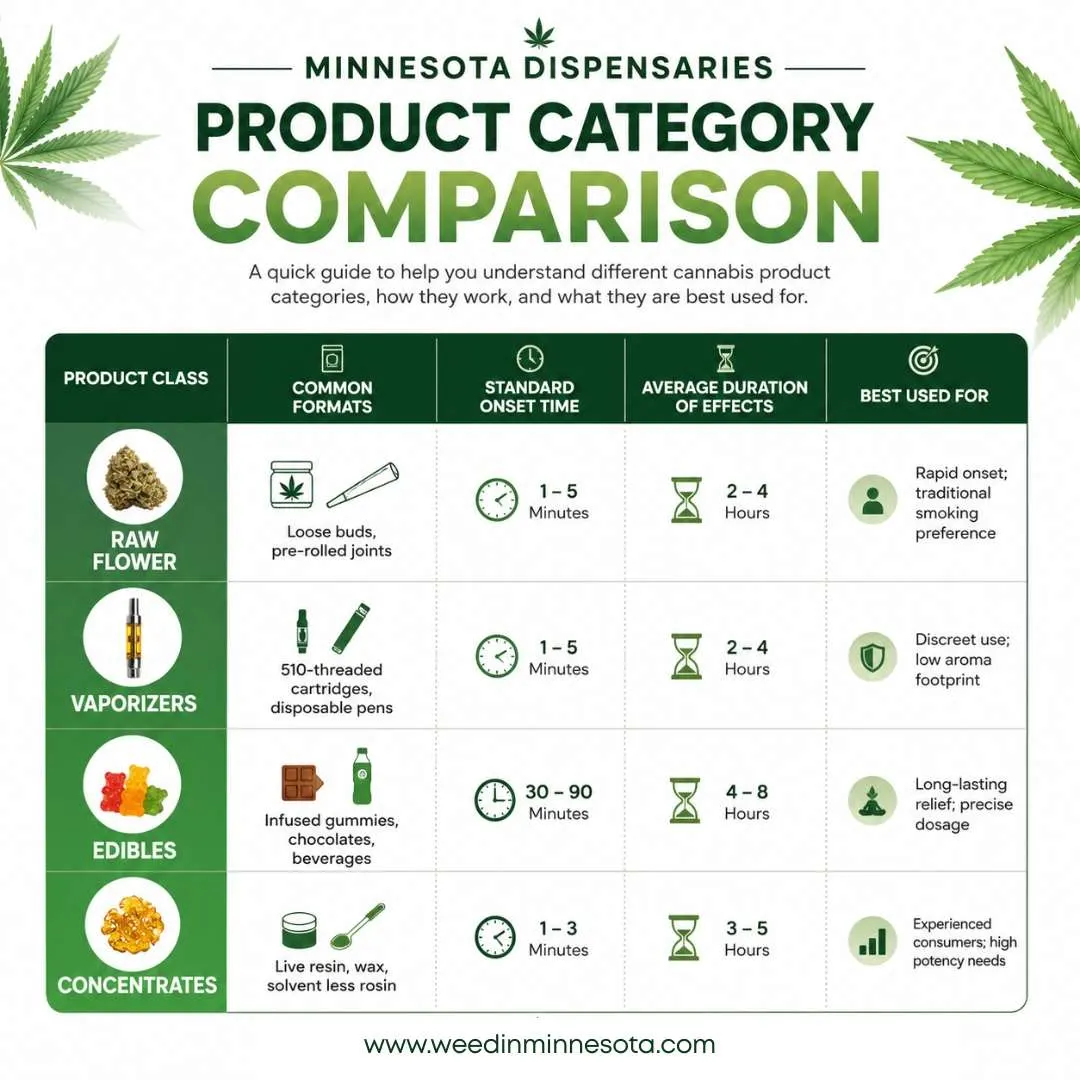
In addition to retail formats, consumers must choose between various product formats based on onset time, duration, and convenience. To clarify these choices, the table below details these key parameters.
Minnesota Dispensaries Product Category Comparison
| Product Class | Common Formats | Standard Onset Time | Average Duration of Effects | Best Used For |
| Raw Flower |
Loose buds, pre-rolled joints |
$1 – 5$ Minutes | $2 – 4$ Hours |
Rapid onset; traditional smoking preference |
| Vaporizers |
510-threaded cartridges, disposable pens |
$1 – 5$ Minutes | $2 – 4$ Hours |
Discreet use; low aroma footprint |
| Edibles |
Infused gummies, chocolates, beverages |
$30 – 90$ Minutes | $4 – 8$ Hours |
Long-lasting relief; precise dosage |
| Concentrates |
Live resin, wax, solvent less rosin |
$1 – 3$ Minutes | $3 – 5$ Hours |
Experienced consumers; high potency needs |
Expert Insights: Regulatory Timelines and Market Capitalization
According to recent market data, Minnesota’s cannabis economy is expanding at a steady pace, driven by robust customer transactions. Specifically, in the first four months of 2026, the state recorded a combined 85 million dollars in recreational and medical sales.
Therefore, to manage this expansion, the Office of Cannabis Management structured a detailed licensing framework. To illustrate this structure, the table below details the license allocations established under state guidelines, emphasizing the balanced distribution between social equity and general applicants.
OCM Cannabis Business License Allocations
| License Type | Social Equity Allocations | General Applicant Allocations | Total Initial Licenses |
| Retailer | $75 | $75 | $150 |
| Cultivator | $25 | $25 | $50 |
| Mezzo business | $50 | $50 | $100 |
| Manufacturer | $12 | $12 | $24 |
| Microbusiness | No Limit | No Limit | Open/Rolling Review |
| Wholesaler | No Limit | No Limit | Open/Rolling Review |
Furthermore, the implementation of the 2026 Omnibus Cannabis Bill (SF4401) reshapes the structural parameters of the industry. By capping the newly established “macro business” licenses at eight state wide until 2030, regulators seek to protect local craft independent businesses from corporate dominance.
However, some industry analysts express concern that the associated reduction in cultivation canopy limits, which decreases the maximum allowable indoor canopy to 38,000 square feet, may make it difficult to fully close the gap between supply and demand. Consequently, this dynamic has contributed to elevated retail pricing across the state, with premium flower running up to 18 dollars per gram in mid-2026.
In order to track these complex changes, the historical progress of these regulatory shifts is summarized in the timeline below.
Minnesota Dispensaries Industry Regulatory Timeline
| Date | Key Milestone | Market Impact |
| August 1, 2023 |
Official legalization of adult-use cannabis in Minnesota |
Personal possession of 2 ounces in public becomes legal |
| September 16, 2025 |
First non-tribal state-licensed dispensary opens in Duluth |
Commercial market officially begins operating |
| February 5, 2026 |
First municipal dispensary opens in the City of Anoka |
Establishes a community-owned, public enterprise model |
| May 28, 2026 |
Governor Walz signs the 2026 Omnibus Cannabis Bill |
Restructures macro business rules and merges supply chains |
| August 1, 2026 |
Omnibus Bill provisions officially take effect |
Strengthens social equity structures and updates warning labels |
| January 1, 2027 |
Macro business licensing window officially opens |
Replaces legacy medical combination business structures |
Common Mistakes to Avoid in Minnesota Dispensaries
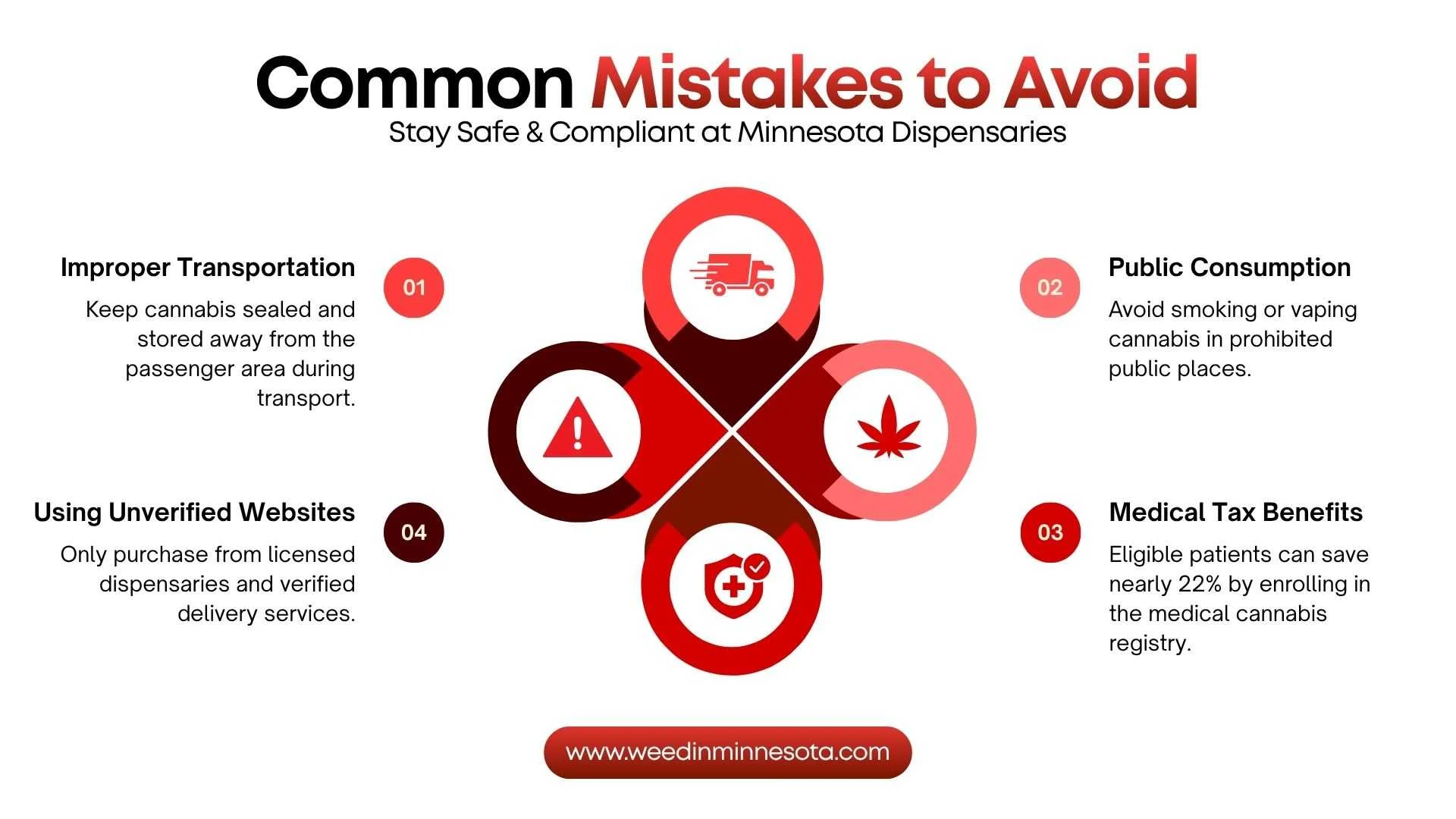
To ensure a safe experience, consumers navigating Dispensaries in Minnesota can protect themselves from legal issues and unnecessary expenses by avoiding several common operational pitfalls.
First, traveling with unsealed or accessible containers is a frequent error. Specifically, it is illegal to transport open or unsealed cannabis containers in the passenger area of a motor vehicle. Consequently, all products must be stored in their original packaging in the vehicle’s trunk or another area inaccessible to the driver and passengers.
Second, consuming cannabis in prohibited public zones can lead to fines. While state law permits recreational use, consumers cannot smoke or vape cannabis in locations covered by the Minnesota Clean Indoor Air Act. As a result, smoking remains illegal in public workplaces, indoor retail spaces, public transportation, and multifamily housing balconies starting in March 2025.
Third, neglecting medical registry tax benefits is a costly oversight for eligible patients. Indeed, eligible patients with qualifying medical conditions often fail to register with the state, thereby missing out on the substantial $22% tax exemption. Therefore, enrolling in the registry completely eliminates the $15% excise tax and $6.875% sales tax at any certified MN medical dispensary or dual-licensed location.
Finally, ordering from unverified online sources is highly risky. With the growing popularity of online shopping, consumers frequently fall prey to fraudulent or unregulated websites that mimic legal delivery services. To avoid this, shoppers should verify that a delivery operator holds a valid OCM license and matches a reputable, physical address in the state.
Frequently Asked Questions (FAQs)
Q : How long until recreational dispensaries open in Minnesota?
A : Currently, recreational dispensaries are already open and operating throughout the state. Specifically, sovereign tribal storefronts launched operations in August 2023, while the first non-tribal state-licensed recreational dispensaries officially opened their doors in September 2025.
Q : Are there recreational dispensaries in Minnesota?
A : Yes, there are multiple active recreational dispensaries across Minnesota. Indeed, adults aged 21 and older can legally purchase cannabis flower, concentrates, and edibles from licensed physical retail storefronts and delivery services.
Q : How many licensed dispensaries are there in Minnesota?
A : As of mid-2026, the state has approved approximately 240 active licenses from over 3,500 total applications. Therefore, there are currently about 96 state-licensed adult-use retail establishments in operation, alongside sovereign tribal facilities and municipal dispensaries.
Q : When will dispensaries open in Minnesota?
A : Clearly, dispensaries are open now, and the market is undergoing continuous, steady growth. Furthermore, new retail establishments open regularly as the Office of Cannabis Management processes the pipeline of 1,332 preliminarily approved applications.
Q : What should I know before visiting a dispensary?
A : Before visiting a dispensary in Minnesota, a consumer must prepare a valid government-issued photo ID to prove they are 21 or older. Additionally, it is highly recommended to bring cash or use PIN-debit payment systems, as credit cards are not accepted due to federal regulations. Finally, medical patients should bring their state registry credentials to access tax exemptions and medical-specific products at any certified MN medical dispensary.
Conclusion
Ultimately, the market for Dispensaries in Minnesota represents a highly advanced and diverse retail ecosystem. By integrating sovereign tribal operations, municipal models, and private retailers, the state offers unparalleled options for consumers and patients alike. Consequently, staying updated on evolving laws, such as the 2026 Omnibus Cannabis Bill and tax exemption rules, allows shoppers to maximize safety and savings.
For individuals looking for the ultimate combination of premium quality, convenience, and trusted service, the premier platform is weedinminnesota.com. Specifically, operating as a “Trusted MN Cannabis Dispensary,” the brand delivers more than 5,000 orders monthly across Saint Paul, Minneapolis, and Brooklyn Park. Furthermore, boasting over 600 five-star reviews, the dispensary offers seamless curb side pickup, in-store shopping, and rapid home delivery. To begin your journey, consumers can shop the extensive menu of premium weed and legal THC products online to secure the ultimate cannabis experience today.
Frequently Asked Questions
Specifically, a Dispensaries in Minnesota is a legally authorized retail establishment licensed to cultivate, manufacture, or distribute state-regulated cannabis and cannabinoid-containing products directly to the public. However, the operational rules governing these storefronts are established strictly under Chapter 342 of the Minnesota Statutes. As a result, the state's Office of Cannabis Management directly manages this regulatory network to protect consumer health.
First, the growth of verified Minnesota dispensaries plays a critical role in displacing unregulated illicit channels. In the past, consumers faced notable risks, including contaminated products, inaccurate labelling, and inconsistent cannabinoid potencies. Consequently, legalization introduces comprehensive safety guidelines, ensuring that all consumer goods undergo strict, accredited laboratory testing.
In order to assist buyers, evaluating the advantages and limitations of utilizing a regulated dispensary in Minnesota helps consumers make highly informed purchasing decisions. Admittedly, while legal retail guarantees safety and consistency, consumers must navigate higher initial prices and rigid possession limits. To clarify this contrast, the table below outlines the structured trade-offs associated with purchasing through a legal, licensed dispensary in Minnesota compared to unregulated, illicit sources.
Feature Licensed dispensary in Minnesota Unregulated / Illicit Channels Product Safety Testing Mandatory testing for heavy metals, mould, and pesticides None; high risk of contaminants or residual solvents THC Potency Accuracy Strictly verified via state-accredited lab reports Unverified; packaging frequently.
Navigating a dispensary in Minnesota requires adherence to a structured sequence of regulatory checks and purchasing choices. Following these steps ensures a compliant and seamless transaction.
Pingback: Purple Punch Strain: Effects, Flavor & Where to Buy MN
Pingback: dispensaries In Minnesota Near You 2026 – Weedigo – Cannabis Dispensary In Richmond, Virginia